
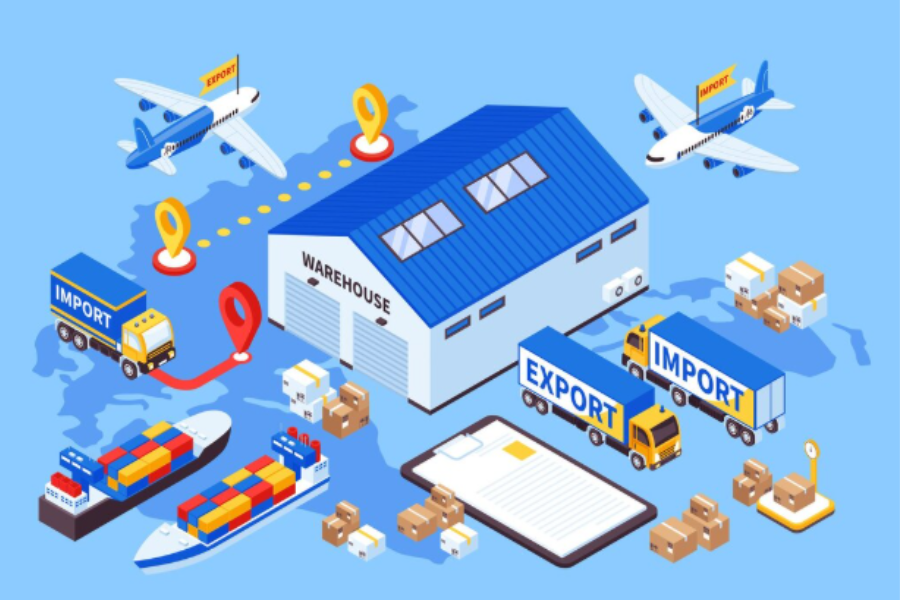
Expanding business beyond domestic borders is a significant milestone for any enterprise. However, before engaging in international trade, businesses in India must obtain Import Export Code Registration, which is a mandatory requirement under the Foreign Trade Policy governed by the Directorate General of Foreign Trade (DGFT).
This registration acts as a unique identification number for businesses involved in importing or exporting goods and services. Without it, cross-border trade transactions cannot be legally carried out. As global trade becomes more accessible, IEC code registration has become an essential step for businesses looking to scale operations internationally.
Understanding Import Export Code Registration
Import Export Code (IEC) is a 10-digit identification number issued by DGFT to Indian businesses engaged in import or export activities. It is a one-time registration and does not require renewal in most cases.
The primary purpose of import export code registration is to regulate international trade and ensure proper tracking of cross-border transactions. It is required for customs clearance, shipping goods abroad, receiving foreign payments, and availing export incentives provided by the government.
Businesses such as manufacturers, traders, startups, and service exporters typically require IEC before initiating international transactions.
Legal Importance of IEC Code Registration
From a legal perspective, IEC code registration is a compliance requirement under India’s Foreign Trade Policy. Banks and customs authorities require this code to process international payments and shipments.
It also helps maintain transparency in foreign exchange transactions, ensuring that imports and exports are properly recorded under regulatory frameworks such as FEMA (Foreign Exchange Management Act).
Unlike many other registrations, IEC does not require filing annual returns or maintaining complex compliance records. However, it must be kept updated whenever there are changes in business details such as ownership or address.
Role of IEC in Global Business Expansion
One of the key advantages of import export code registration is that it enables businesses to enter global markets with ease. It acts as a gateway for companies to participate in international trade without additional licensing requirements for each transaction.
With IEC, businesses can:
- Expand customer base beyond domestic markets
- Import raw materials or finished goods at competitive prices
- Access global suppliers and manufacturers
- Participate in international e-commerce platforms
- Receive payments in foreign currency directly into business accounts
These opportunities make IEC an important enabler for business growth and international presence.
Online Application Process
The process for IEC code registration is fully digital and can be completed through the DGFT portal. It is designed to be simple and accessible for business owners.
1. Prepare Required Documents
Before applying, businesses must have basic documents ready, including:
- PAN card of the business or applicant
- Identity proof such as Aadhaar or passport
- Address proof of the business premises
- Bank account details and cancelled cheque
- Digital signature or Aadhaar-based verification
For companies, LLPs, and partnerships, incorporation documents are also required.
2. Submit Application on DGFT Portal
The applicant must register on the DGFT portal and fill out the IEC application form. Details such as business name, structure, bank information, and contact details must be provided accurately.
3. Verification and Submission
After filling in the details, the application is verified electronically using Aadhaar or digital signature authentication. This step ensures identity validation and reduces manual paperwork.
4. Issuance of IEC Certificate
Once the application is approved, the Import Export Code is issued electronically. The certificate can be downloaded directly from the DGFT portal.
The process is typically completed within a short duration if all documents are in order, making it convenient for businesses planning to start international operations.
Importance for Startups and Growing Businesses
For startups and growing businesses, import export code registration provides access to global markets at an early stage. It removes barriers to entry and allows businesses to explore international demand for their products or services.
Even small businesses can benefit by sourcing materials at better prices or selling niche products internationally. With increasing digital trade platforms, IEC has become more relevant for service providers and online sellers as well.
Conclusion
In today’s interconnected economy, global expansion is no longer limited to large corporations. With IEC code registration, businesses of all sizes can participate in international trade and access new growth opportunities.
Import export code registration not only ensures legal compliance but also enables smoother financial transactions, better market access, and increased business scalability. For any business planning to expand globally, obtaining IEC is one of the first essential steps toward international growth.